
Maybe it’s the start of a new year or maybe it’s the long days of Seattle gray or it could just be approaching 77 that leads me to reflect backwards to a moment in time when life was vastly different.
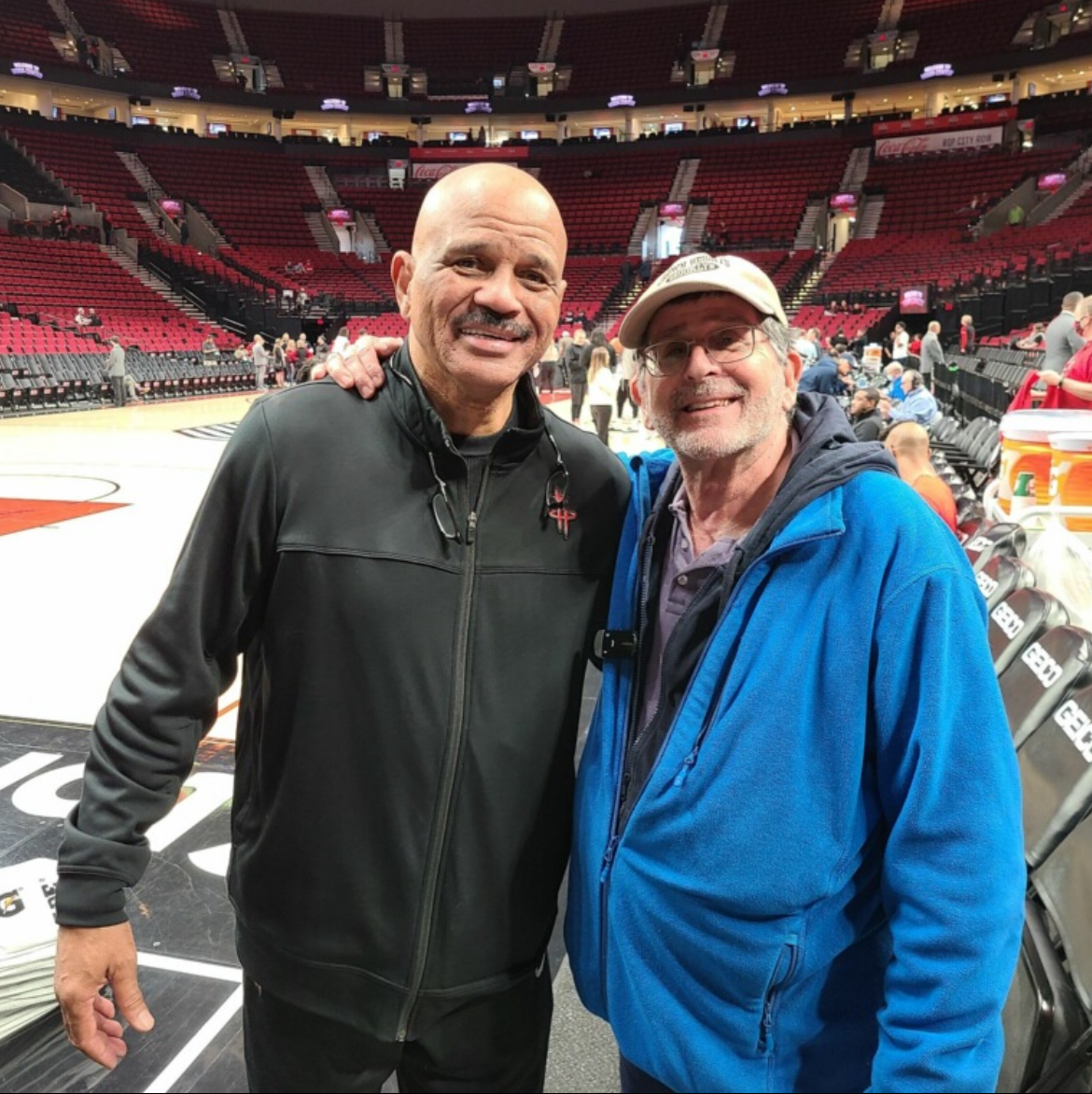
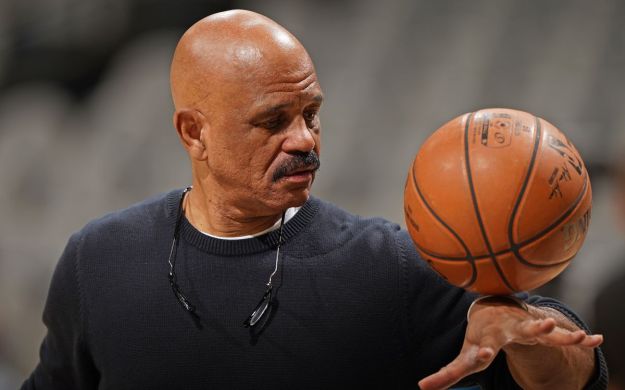
It was 1992 and I was working for John Lucas Enterprise in Houston, a multifaceted corporation led by our very innovative CFO and former 1974 number one NBA draft pick John Lucas who sabotaged his own playing career because of drugs and alcohol abuse.
In response to several failed attempts to get and stay sober John decided to turn his lemons into lemonade by starting a treatment program for the basketball community. Helping others is the best way to insure one’s own sobriety (Step 12 in Alcoholics Anonymous) and John dove in headfirst. I know it worked for John because he will be celebrating forty years sober this coming March (as they say in Texas: Lord willing and the creek don’t rise and if he doesn’t take an off ramp). After all it is only one day at a time.
Along the way he has helped many people from all levels of society not just athletes, giving them a choice and a chance at a better future. I, for one, am incredibly grateful to him for what his model has shown me. Now for the real story.
By 1993 John’s little treatment program had expanded to include a twelve bedroom aftercare house, an in-school drug education program called S.T.A.N.D.(students, taking action, not drugs), a practice venue for the basketball players to get back into playing shape so they can further their basketball careers. The most creative and boldest initiative was to buy a minor-league basketball franchise in the United States Basketball League that plays in the summertime. That franchise was based in Miami and was called the Miami Tropics, but that is a story for a different day.
As the basketball players were transitioning out of treatment and into aftercare, the next piece on the agenda was trying to set up an adult healthy life and for some of them that did not now include playing basketball professionally anymore, mainly because they were past their professional prime. A wonderful team of three former NBA players, and myself with John’s blessing became part of a group known as Bouncing Back. Our goal, our mission statement was simple. It came from the literature of Alcoholics Anonymous. Our stories disclosed in a general away what we used to be like, what happened and what we are like now. Otherwise known as experience, strength and hope. We carried the message and not the mess. Here are the men of Bouncing Back.
Gus Gerard 6 foot eight from the university of Virginia was drafted by the Portland Trail Blazers in the third round (14th pick, 50th overall) of the 1975 NBA draft. He was on the 1974–75 ABA All-Rookie First Team and made the 1976 ABA All Star Team. He played in all 84 games of his rookie season and his future in the NBA looked bright.
Gerard’s ABA and NBA careers were hampered by drug problems; after leaving professional basketball and getting into recovery, Gus became a licensed chemical dependency counselor and was involved in Bouncing Back, in which athletes like himself, former Spirits of St. Louis teammate Marvin Barnes and former NBA player Dirk Minniefield travel to schools and businesses, sharing their stories about addiction and recovery. Dirk Minniefield is an American past professional basketball player. While at Lafayette High School in Lexington, he was named the 1979 Kentucky “Mr. Basketball”, an honor given to the top high school player in the state of Kentucky. In addition to “Mr. Basketball”, he was also named a McDonald’s and Parade High School All-American. Minniefield played his college ball at the University of Kentucky(UK), where he became a member of the 1,000 point club. In 1983, he was drafted in the second round (33rd overall) by the NBA’s Dallas Mavericks. The 6 ft 3 in guard played three seasons in NBA, making stops in Cleveland, Houston, Golden State, and Boston.
Minniefield’s drug use eventually contributed to the early end of his NBA career. He returned to Lexington, but wound up serving a year in jail after writing bad checks and violating probation on those charges. He found his way to the John Lucas Drug Abuse Center in Houston; Minniefield would say of Lucas, “I finally found that person who talked my language. He could see past the outside facade I learned to put up.”
Marvin “Bad News” Barnes (July 27, 1952 – September 8, 2014) was an American professional basketball player. A 6-9 forward, he was an All-American at Providence College, and played professionally in both the American Basketball Association (ABA) and National Basketball Association (NBA).
He had his greatest success while in the ABA, where he was a star player for the Spirits and was named Rookie of the Year for the 1974–75 season. Barnes also shares the ABA record for the most two-point field goals in a game, with 27 total made.
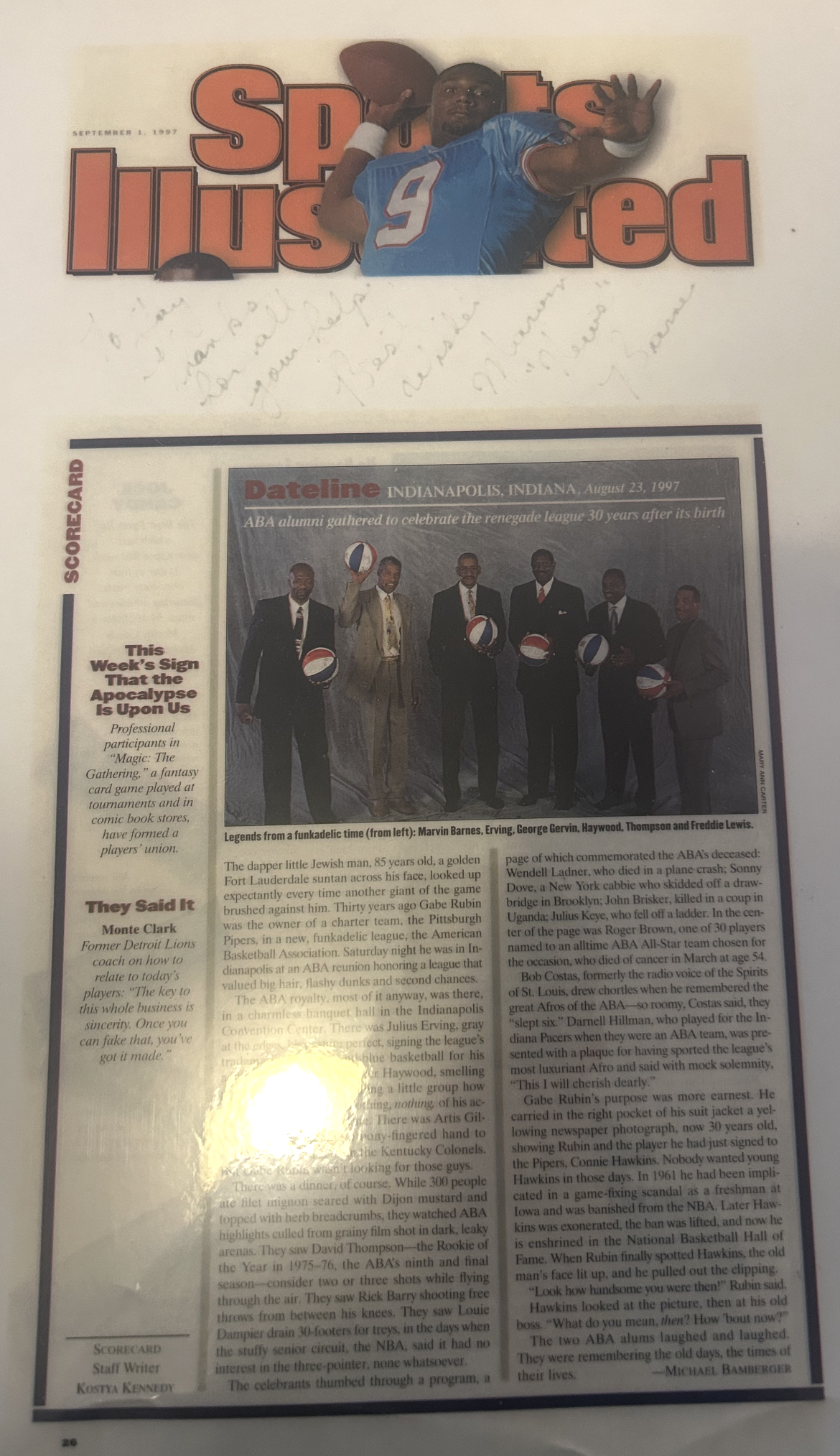
Because of his drug use, Barnes’s NBA career was cut short and he wound up homeless in San Diego in the early 1980s. After several rehab programs, Barnes started reaching out to youth in South Providence, where he grew up, urging them not to make the same mistakes he had.
On September 8, 2014, Barnes died at the age of 62. The death was confirmed by Kevin Stacom, a scout for the Dallas Mavericks, who was a teammate on the Providence College team that reached the Final Four in 1973. Barnes, who had been drug-free for several years, had recently succumbed to his addiction again, Stacom said.
Words can’t express how sad I was when I heard about Marvin’s passing. What I remember most about a wonderful man chiseled out of stone was a big smile, a big heart and a big hug. Rest in peace, my brother.
For my money Marvin is the greatest basketball player to never be in the national basketball Hall of Fame.
We traveled, we talked, we laughed, and we tried our best to bring the message of recovery to mainly kids, but also to anyone close enough to listen.
Gus is happily remarried and lives in Western Pennsylvania and Dirk is still working for the NBA, living in Houston and carrying the message to rookies who are entering the league.
We have all gone our separate ways, but are forever connected due to the vision and passion of John Lucas, and recovery. Proving that bouncing back from addiction is possible, and as I always say at the end of my blogs misery is optional, and don’t leave before the miracle.
 NO MORE SECRETS