
It’s 4:45am and I can’t sleep. It’s a combination of a 76-year-old bladder and a series of revelations wrapped around a movie I saw three days ago. I know me well enough to know that for this night’s sleep, there’s no going back. Can’t dance, might as well write.
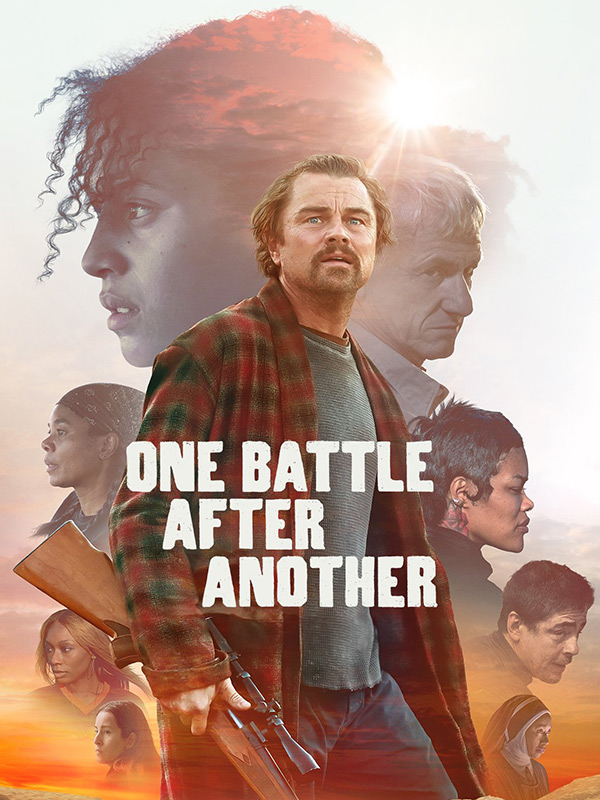
The movie One Battle After Another is an action thriller about an ex-revolutionary who is forced back into his old life to save his daughter when she is targeted by a corrupt military officer. The premise involves themes of revolution, rebellion, and the enduring legacy of conflict across generations.
That’s the official synopsis of the movie. The original teaser copy. My humble opinion is that the movie should win many awards. A provocative powerful film that at least for me rented a lot of space in my head, but this blog isn’t a movie review, no spoiler alert, just a segue to get to the underpinnings, as seen through my eyes.
The hallmark of an addicted family is based on three main paradigms:
#1 is DON’T TALK – #2 is DON’T TRUST – #3 DON’T FEEL
They collectively create at least one active substance addict plus a system of people who give tacit approval to the behavior(s).
In order to sustain the status quo’s there needs to be an exceptional narrative that everyone buys into. Kind of resembles “Looking Good and Being Right.
This premise was first developed by Dr. John Bradshaw. Dr. Bradshaw was a counselor and speaker who combined psychology, philosophy, and theology in his work. He wrote several best-selling books, including Homecoming and Healing the Shame that Binds You. He also hosted multiple public television series, such as Bradshaw On: Homecoming, for which he was nominated for an Emmy Award.
Bradshaw’s work has influenced millions of people through his books, lectures, and public television programs. His methods are still practiced today, particularly in the fields of addiction and family systems therapy.
Dr. John Bradshaw passed away on May 8, 2016, at the age of 82, from cardiac arrest.
In the last decade of his career, he teamed up with Dr. Patrick Carnes to connect his work on family systems with Dr. Carnes work on sexual addiction. The lifelong work of both men was forever connected. The true connected tissue was the presence and power of toxic shame.
Addicts’ experiences leave them feeling on a cellular level that they just did not believe that they did bad behavior but intrinsically believed that they are BAD PEOPLE. For me, I am clear that I cannot take bad people and make them good, that’s Gods job, but I can help sick people get well through the process of recovery.
When a life crisis happens and forces someone in the system to start to de-construct the false narrative of their life, all hell usually breaks out through out the entirety of the system. It is the famous line from the Wizard of Oz that says: pay no attention to the man behind the curtain.
Recovery forces people to look behind the curtain at a lifetime of lying, deception and manipulation, and as I have said for over twenty five years about the men and women of No More Secrets: this is not for the faint of heart and DENIAL IS A BITCH. To some degree everyone in the system has a vested interest in keeping the myth of the system in place. The band-aide hurts when it gets pulled off!
The dis-ease effects even family members who came a generation or two after the original sin. It presents without history or language, yet it is a persistent foe and could be just as destructive. It is the corrosive nature of family shame.
It has been a theme in our culture for decades.
Bobbie Gentry‘s 1967 song “Ode to Billie Joe“. The song, which does not explicitly state why he jumped, inspired a 1976 film that provided some answers, though the lyrics themselves remain a mystery.
While the last five verses mentioned the father and grandfather confronting William/Billie Joe, they left out the beating and throwing him off the bridge, and left it at William committing suicide out of shame for what he did to Anne.
Truly ONE BATTLE AFTER ANOTHER.
As it says in the Sex and Love Addicts Anonymous (S.L.A.A.) Big Book “you can’t lastingly outrun this illness”.
The only way out of this is to get some help and go through it, remembering that time takes time.
Oh, by the way, see the movie if you get the chance. Worth the time and the money. Just my opinion, I could be wrong.
And remember, misery IS optional.
 NO MORE SECRETS